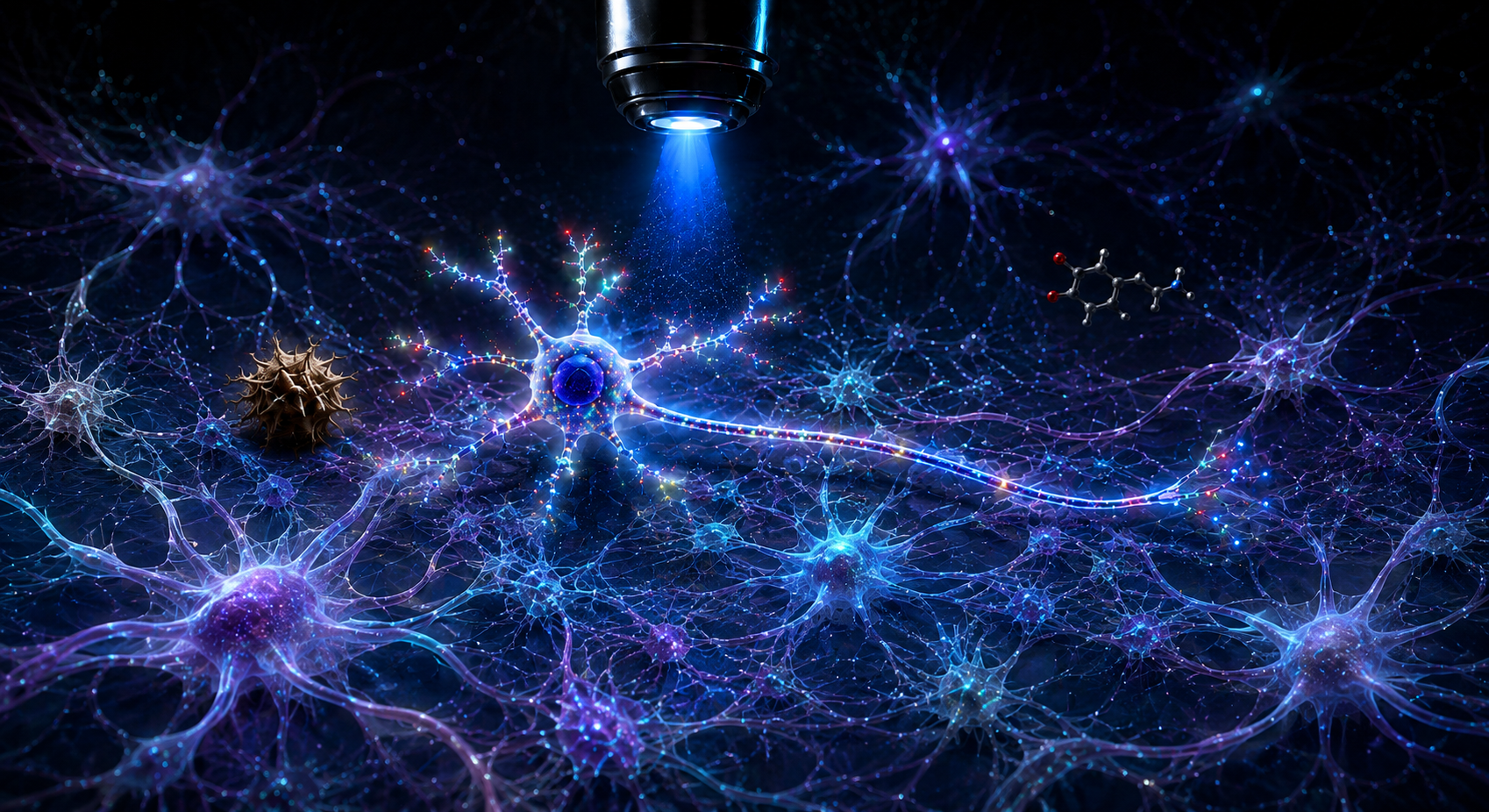
How does the brain encode external information into memory, make decisions under different conditions, and lose control in disease states? This is one of the most fascinating questions in neuroscience. The brain is not composed of a single type of cell, but rather consists of highly complex and dynamically changing networks formed by diverse neurons and glial cells. Understanding how these cells connect with one another, encode information, and become dysregulated in disease will help reveal the fundamental principles by which the brain generates intelligence, memory, and behavior.
To address these questions, we develop and apply cutting-edge spatial omics technologies, combined with RNA barcoding, in vivo imaging, neural modulation, and computational analysis, to study the organizational principles of molecules, cells, and neural networks at the whole-brain scale. Spatial omics enables the detection of large numbers of genes, cell types, and molecular signals while preserving the spatial structure of brain tissue. This allows us to systematically analyze changes in the brain under healthy and disease conditions, much like creating a detailed brain map.
Through a multiscale and multimodal research strategy, our laboratory aims to address the following core questions:
- How does the brain coordinate different cell types and neural circuits to encode and process external information and guide decision-making?
- How do brain disorders such as Alzheimer's disease and drug addiction alter circuit connectivity, leading to impaired memory or the pathological strengthening of memory?
- Can spatial omics and computational models be used to develop new approaches for predicting brain function and disease progression?
We welcome students who are interested in neuroscience, spatial omics, mechanisms of brain disease, imaging technologies, and computational analysis. Whether your background is in biology, chemistry, computer science, engineering, mathematics, or an interdisciplinary field, if you are curious about how the brain works, you will find exciting questions to explore here.